Unique era, unique people
Florida's Gilded Age
The Golden Age of Florida steamboats was 1878-1888 although they serviced Florida tourists into the early 20th century.
The citrus boom and President Grant’s 1880 tour of Florida ushered in Florida’s Gilded Age. Orange fever and throngs of tourists, generated vast fortunes for the City of Sanford’s owners and other early businessmen.
The freight needs for steamboats diminished as more rail was built. Tourists replaced cargo, taking exotic cruise vacations to the Land of Flowers before hotels followed the rail.
However the steamboat era gave birth to both Florida’s citrus and tourist industries reinforcing the steamboats importance in the greater context of national history.

The Reception at Key West - President Grant - Torchlight Parade, Key West Florida 1880, From the sketches by Frank H. Taylor.

19th century engraving of orange grove and packing boxes.
River Commerce
The City of Sanford, launched in 1880, was jointly owned by Tysen & Smith and Wightman & Christopher. Both had been trained in New York and were in business in Jacksonville by 1878. By 1885 they were multi millionaires.
Tysen & Smith sent building supplies, staples and orange grove necessities for the burgeoning new settlements down river on the City of Sanford. Wightman & Christopher, Florida’s first wholesale grocer and commission agents, brought huge quantities of citrus and early vegetables back up river for export to northern markets.
Charles Smith was the only owner who went to the wreck site. He attempted to find all the bodies and offered a reward to continue the search. Smith later owned six more tourist steamers and would become Republican mayor of Jacksonville in 1887. His win was helped by the backing of the Knights of Labor, the United States first major labor group. It admitted all working people including women and blacks. Jacksonville’s first five African American aldermen were also elected.
A Yellow Fever epidemic soon struck and the city was quarantined. The governor rescinded Mayor Smith’s and the city council’s elected positions when a quorum couldn’t be established. The governor then appointed a new Southern Democrat mayor and all white city council.
A black person would not win a council seat again in Jacksonville until the 1960’s. No Republican mayor would be elected in Jacksonville again until the 1990’s.
It should be noted that Smith placed African Americans in positions of authority on the City of Sanford, the Isis and subsequent boats including the Fannie Dugan. His actions were considered highly unusual in the post Civil War south.


Jacksonville Election Day Lines, Hall, c1870
Knights of Labor Insignia 1878.
Yankee Visitors in Jacksonville Florida Stereoscopic Views American and Foreign Scenery, publisher R.K. Bonine c1875
John G. Christopher, who had created Florida’s first telephone exchange in 1880, also built Florida’s first electric generating plant to illuminate the palatial Murray Hall Hotel in Pablo Beach in 1884. Christopher later also owned several lumber schooners and ocean-going vessels. His machinery and mill supply venture, created in 1896, became one of the largest operations in the south.
The infamous Three Friends steamboat, owned by soon to be Florida Governor Napoleon Broward, is historically known for smuggling weapons and revolutionaries into Cuba. It utilized Wightman & Christopher’s wharves in 1896 when munitions labeled as “groceries” were shipped to their facilities before being loaded onto Broward’s boat.
Peter Jones, originally from England, was a six time mayor of Jacksonville. He operated both a mercantile business and boat yard and held the lucrative federal position of Steamboat Inspector.
Inexplicably the Jacksonville Inquest blamed the Inspection Service by determining that the enforcement of the rules had been too lax, leading to the fiery catastrophe. Ironically, in 1886 Jones was named Jacksonville’s first fire chief and he is credited with creating the Jacksonville Fire and Rescue Department, JFRD.

Schooners on the St. Johns River, published Ashmead Brothers, Jacksonville Florida c1875
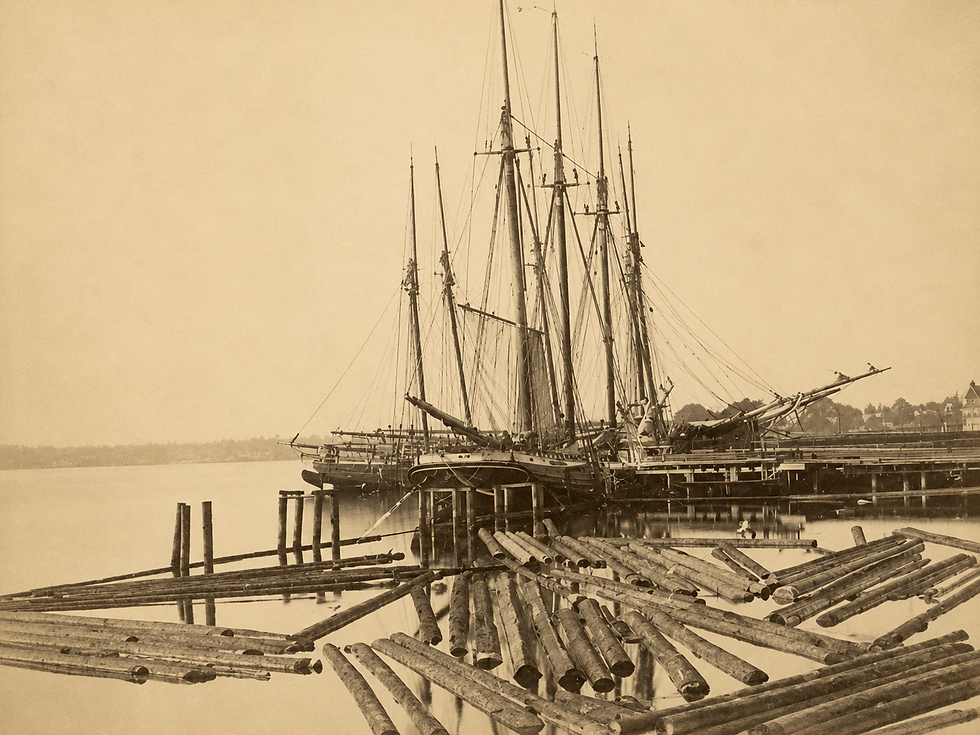
Lumber Wharf, Views in Jacksonville, published E. And H.T. Anthony c1880

JFRD Logo.

Three Friends Steamboat, Florida Memory, public domain c1895

The Fannie Dugan, Image from the Portsmouth Public Library
Henderson Davis was the 25-year-old junior pilot that dutifully drove the City of Sanford aground with the pilot house on fire all around him. Documented mixed race in the 1880 census, he was 8 years old when the Civil War ended. He was a deckhand before being promoted to pilot, a position that was extremely rare for an African American man in the discriminatory south.
Although the Captain took credit for driving the boat ashore, it was actually Davis that bravely attempted to save the lives of those onboard by staying at his post and performing the duties expected of him. He was rehired as pilot on the Fannie Dugan, the steamer brought in to replace the City of Sanford two months later.
Lulu Paine (Anna Louise Paine), 19 years old, christened the City of Sanford with a bottle of champagne across the bow at launch October 22, 1880. She married attorney Duncan Fletcher who became Florida’s longest serving US senator. Lulu was a spiritualist who held seances in their Washington home. A vocal defender of spiritualism, she challenged Harry Houdini’s attempts to outlaw the practice in front of Congress in 1926.
George Chase, the City of Sanford’s builder, was originally from Maine and came to Jacksonville in 1857 when the population was only 1500. Trained by Jacob Brock, he operated a shipyard for several years then transitioned to the ship chandlery business. His customers included the Carnegies on Cumberland Island. His building, rebuilt after the fire of 1901, is a listed Jacksonville landmark.


Anna Louise Paine Fletcher
Peter Jones business. Views in Jacksonville Florida, published E. and H.T Anthony Company, New York c1880
George Chase chandlery business site built in 1904
Harriet Beecher Stowe, the well-known abolitionist, owned a home with an orange grove on the St. Johns River near Jacksonville from 1867-1884. Her grove was so lucrative she called her oranges “golden balls”. Crates of her oranges would be placed on a nearby dock for steamer pickup and northern distribution. Through her writings Stowe encouraged her readers to come to Florida and her riverfront home was a popular site pointed out to early Florida river tourists.

Harriet Beecher Stowe Residence, Views of Florida, Wood & Bickle, photographers, Jacksonville FL c1875